

What is torticollis?
Torticollis is a condition in which the neck muscles are tight or spasm, causing the head to tilt to one side and making it hard to turn the head normally. In babies it is usually caused by a tight neck muscle and may be present at birth.
In older children and adults, torticollis can start suddenly after muscle strain, injury, or infection. It is usually very treatable with stretching, physical therapy, or treatment of the underlying cause, and early attention helps most people recover comfortable, natural neck movement.
In infants, torticollis often appears alongside a flat spot on the head (plagiocephaly), so the two are usually treated together.
Types of torticollis
- Congenital muscular torticollis
- Present at birth or in the first weeks of life, usually from a tight sternocleidomastoid muscle.
- Acquired torticollis
- Develops later from muscle strain, injury, infection, or other causes.
Common signs and challenges
- Head tilts to one side
- Prefers turning the head one way
- Trouble feeding on one side
- Flat spot on the back or side of the head
- Tight or firm neck muscle
- Neck pain or stiffness
- Limited neck rotation
- Uneven shoulders or posture
How therapy may help
Every plan starts with an evaluation. Which disciplines are involved depends on your goals and what the evaluation shows.
What to expect at Empowerize
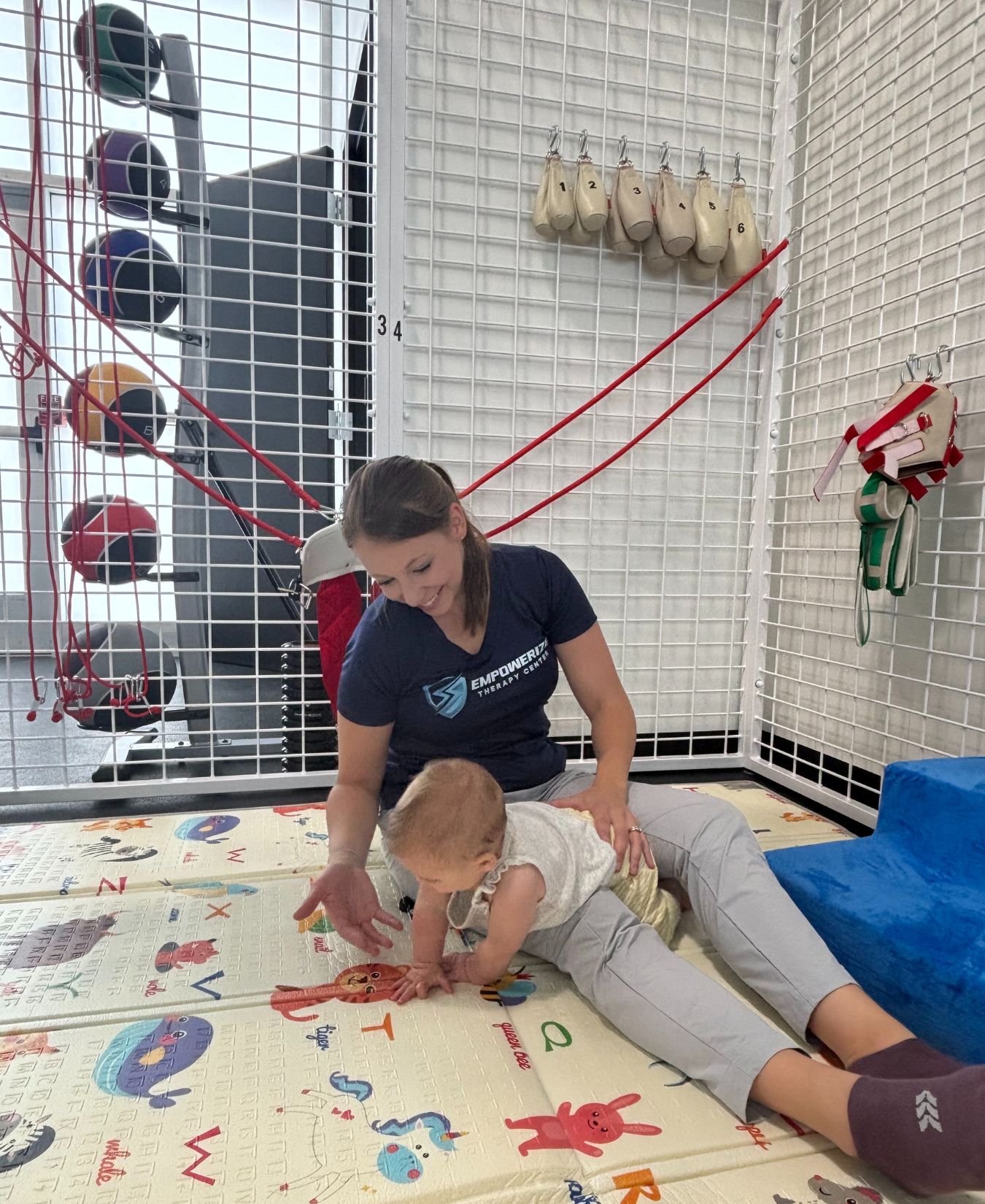
Your therapist works one-on-one with you or your child to build a customized treatment plan. We collaborate with your referring physician and give regular updates on your plan of care. Families and caregivers are included in goal setting and home strategies.
Questions families ask about torticollis
When should my baby see a physical therapist for torticollis?
As soon as you notice a head tilt or a strong preference for turning one way. Starting early, often in the first few months, usually leads to faster improvement.
Will my baby need a helmet?
Not always. Many babies improve with physical therapy and positioning alone. Your therapist and pediatrician will monitor head shape and discuss options if needed.
How long does torticollis therapy take?
It depends on age and severity. Many infants improve over a few months with regular sessions and daily home exercises.