Empowerize Therapy Center
Home
Our Story
Our Services
  • Physical Therapy
  • Speech Therapy
  • Occupational Therapy
  • Personal Training
  • Dry Needling
Contact
Our Team
  • Our Team
  • Meet Alicia
  • Meet Caleb
  • Meet Sarah
  • Meet Lee
  • Meet Malia
Conditions
  • Autism Spectrum Disorder
  • Stroke (CVA)
  • Parkinson's Disease
  • Traumatic Brain Injury
  • Cerebral Palsy (CP)
  • Concussion
  • Developmental Delay
  • Spinal Cord Injury
  • Cognitive Impairment
  • Multiple Sclerosis
  • ALS
  • Apraxia
  • Dementia/ Alzheimer's
  • Torticollis
  • Down Syndrome
  • Dysphasia
  • Muscular Dystrophy
  • Brain Tumor
  • Rett Syndrome
Gallery
Learning Center
Empowerize Therapy Center
Home
Our Story
Our Services
  • Physical Therapy
  • Speech Therapy
  • Occupational Therapy
  • Personal Training
  • Dry Needling
Contact
Our Team
  • Our Team
  • Meet Alicia
  • Meet Caleb
  • Meet Sarah
  • Meet Lee
  • Meet Malia
Conditions
  • Autism Spectrum Disorder
  • Stroke (CVA)
  • Parkinson's Disease
  • Traumatic Brain Injury
  • Cerebral Palsy (CP)
  • Concussion
  • Developmental Delay
  • Spinal Cord Injury
  • Cognitive Impairment
  • Multiple Sclerosis
  • ALS
  • Apraxia
  • Dementia/ Alzheimer's
  • Torticollis
  • Down Syndrome
  • Dysphasia
  • Muscular Dystrophy
  • Brain Tumor
  • Rett Syndrome
Gallery
Learning Center
More
  • Home
  • Our Story
  • Our Services
    • Physical Therapy
    • Speech Therapy
    • Occupational Therapy
    • Personal Training
    • Dry Needling
  • Contact
  • Our Team
    • Our Team
    • Meet Alicia
    • Meet Caleb
    • Meet Sarah
    • Meet Lee
    • Meet Malia
  • Conditions
    • Autism Spectrum Disorder
    • Stroke (CVA)
    • Parkinson's Disease
    • Traumatic Brain Injury
    • Cerebral Palsy (CP)
    • Concussion
    • Developmental Delay
    • Spinal Cord Injury
    • Cognitive Impairment
    • Multiple Sclerosis
    • ALS
    • Apraxia
    • Dementia/ Alzheimer's
    • Torticollis
    • Down Syndrome
    • Dysphasia
    • Muscular Dystrophy
    • Brain Tumor
    • Rett Syndrome
  • Gallery
  • Learning Center
  • Home
  • Our Story
  • Our Services
    • Physical Therapy
    • Speech Therapy
    • Occupational Therapy
    • Personal Training
    • Dry Needling
  • Contact
  • Our Team
    • Our Team
    • Meet Alicia
    • Meet Caleb
    • Meet Sarah
    • Meet Lee
    • Meet Malia
  • Conditions
    • Autism Spectrum Disorder
    • Stroke (CVA)
    • Parkinson's Disease
    • Traumatic Brain Injury
    • Cerebral Palsy (CP)
    • Concussion
    • Developmental Delay
    • Spinal Cord Injury
    • Cognitive Impairment
    • Multiple Sclerosis
    • ALS
    • Apraxia
    • Dementia/ Alzheimer's
    • Torticollis
    • Down Syndrome
    • Dysphasia
    • Muscular Dystrophy
    • Brain Tumor
    • Rett Syndrome
  • Gallery
  • Learning Center

What is a Spinal Cord Injury?

Welcome to Empowerize Therapy Center Physical Therapy

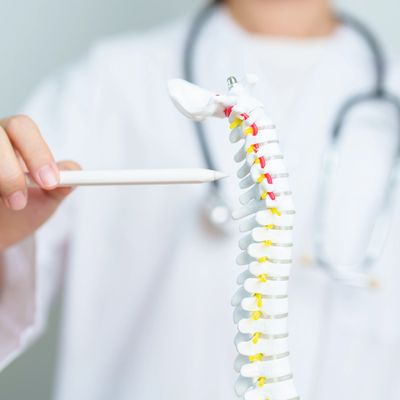
 A spinal cord injury is damage to the spinal cord that disrupts the way signals travel between the brain and the rest of the body. Because the spinal cord carries the nerve pathways responsible for movement, sensation, and many automatic body functions, an injury can lead to partial or complete loss of movement, feeling, or control below the level where the damage occurs. These injuries can result from trauma—such as a fall, motor vehicle accident, or sports injury—or from medical conditions that affect the spine. The effects vary widely depending on the location and severity of the injury, ranging from weakness or altered sensation to complete paralysis. Spinal cord injuries are complex and often require long‑term medical care, rehabilitation, and adaptive strategies to support independence and daily functioning. 

How Can Therapy Help T

Get Back to Doing What You Love with Empowerize Therapy Center Physical Therapy

 Physical therapy plays a central role in the rehabilitation of people with spinal cord injuries by helping them regain as much movement, strength, and functional independence as possible. Because a spinal cord injury disrupts the communication between the brain and the body, individuals may experience changes in mobility, balance, muscle control, and overall physical function. Physical therapists address these challenges through targeted exercises, mobility training, and techniques designed to strengthen preserved muscle groups and prevent secondary complications. Therapy often includes practicing transfers, improving sitting balance, and working on standing or walking when appropriate, using assistive devices or specialized equipment as needed. Physical therapists also focus on maintaining joint flexibility, reducing muscle tightness, and preventing issues such as pressure injuries or contractures. Beyond direct physical gains, therapy helps individuals learn safe movement strategies and adapt to new ways of performing daily activities. This comprehensive approach supports long‑term health, promotes independence, and enhances overall quality of life for people recovering from or living with a spinal cord injury. 


Speech therapy can play an important role in the rehabilitation of people with spinal cord injuries, particularly when the injury affects the areas of the nervous system involved in breathing, swallowing, or communication. Depending on the level of the injury, individuals may experience reduced breath support, changes in voice quality, or difficulty coordinating the muscles needed for safe swallowing. Speech‑language pathologists address these challenges by helping individuals strengthen respiratory control for speech, improve vocal clarity, and use techniques that support effective communication. They also evaluate and treat swallowing difficulties, which can occur when muscle control is affected or when medical interventions such as tracheostomy or ventilator use are involved. Therapy may include exercises to improve swallowing safety, strategies to reduce aspiration risk, and guidance on diet modifications when needed. In addition, speech therapists can assist with cognitive‑communication skills if the injury is accompanied by a traumatic brain injury or other cognitive changes. Through this combination of support, speech therapy helps individuals with spinal cord injuries communicate more effectively, maintain safe swallowing, and participate more fully in daily activities.
Experience the Empowerize Therapy Center Difference

At Empowerize Therapy Center, we're dedicated to providing exceptional care in a warm and welcoming environment. Our therapists are passionate about helping patients achieve their goals, and we use the latest techniques and technologies to ensure the best possible outcomes. Contact us today to learn more about how we can help you get back to doing what you love!

Book Your Evaluation Now

Phone: (810) 772-7600

Fax: (810) 206-3165

Email: admin@empowerizetherapycenter.com


Copyright © 2026 Empowerize Therapy Center - All Rights Reserved.


Powered by

This website uses cookies.

We use cookies to analyze website traffic and optimize your website experience. By accepting our use of cookies, your data will be aggregated with all other user data.

Accept