Empowerize Therapy Center
Home
Our Story
Our Services
  • Physical Therapy
  • Speech Therapy
  • Occupational Therapy
  • Personal Training
  • Dry Needling
Contact
Our Team
  • Our Team
  • Meet Alicia
  • Meet Caleb
  • Meet Sarah
  • Meet Lee
  • Meet Malia
Conditions
  • Autism Spectrum Disorder
  • Stroke (CVA)
  • Parkinson's Disease
  • Traumatic Brain Injury
  • Cerebral Palsy (CP)
  • Concussion
  • Developmental Delay
  • Spinal Cord Injury
  • Cognitive Impairment
  • Multiple Sclerosis
  • ALS
  • Apraxia
  • Dementia/ Alzheimer's
  • Torticollis
  • Down Syndrome
  • Dysphasia
  • Muscular Dystrophy
  • Brain Tumor
  • Rett Syndrome
Gallery
Learning Center
Empowerize Therapy Center
Home
Our Story
Our Services
  • Physical Therapy
  • Speech Therapy
  • Occupational Therapy
  • Personal Training
  • Dry Needling
Contact
Our Team
  • Our Team
  • Meet Alicia
  • Meet Caleb
  • Meet Sarah
  • Meet Lee
  • Meet Malia
Conditions
  • Autism Spectrum Disorder
  • Stroke (CVA)
  • Parkinson's Disease
  • Traumatic Brain Injury
  • Cerebral Palsy (CP)
  • Concussion
  • Developmental Delay
  • Spinal Cord Injury
  • Cognitive Impairment
  • Multiple Sclerosis
  • ALS
  • Apraxia
  • Dementia/ Alzheimer's
  • Torticollis
  • Down Syndrome
  • Dysphasia
  • Muscular Dystrophy
  • Brain Tumor
  • Rett Syndrome
Gallery
Learning Center
More
  • Home
  • Our Story
  • Our Services
    • Physical Therapy
    • Speech Therapy
    • Occupational Therapy
    • Personal Training
    • Dry Needling
  • Contact
  • Our Team
    • Our Team
    • Meet Alicia
    • Meet Caleb
    • Meet Sarah
    • Meet Lee
    • Meet Malia
  • Conditions
    • Autism Spectrum Disorder
    • Stroke (CVA)
    • Parkinson's Disease
    • Traumatic Brain Injury
    • Cerebral Palsy (CP)
    • Concussion
    • Developmental Delay
    • Spinal Cord Injury
    • Cognitive Impairment
    • Multiple Sclerosis
    • ALS
    • Apraxia
    • Dementia/ Alzheimer's
    • Torticollis
    • Down Syndrome
    • Dysphasia
    • Muscular Dystrophy
    • Brain Tumor
    • Rett Syndrome
  • Gallery
  • Learning Center
  • Home
  • Our Story
  • Our Services
    • Physical Therapy
    • Speech Therapy
    • Occupational Therapy
    • Personal Training
    • Dry Needling
  • Contact
  • Our Team
    • Our Team
    • Meet Alicia
    • Meet Caleb
    • Meet Sarah
    • Meet Lee
    • Meet Malia
  • Conditions
    • Autism Spectrum Disorder
    • Stroke (CVA)
    • Parkinson's Disease
    • Traumatic Brain Injury
    • Cerebral Palsy (CP)
    • Concussion
    • Developmental Delay
    • Spinal Cord Injury
    • Cognitive Impairment
    • Multiple Sclerosis
    • ALS
    • Apraxia
    • Dementia/ Alzheimer's
    • Torticollis
    • Down Syndrome
    • Dysphasia
    • Muscular Dystrophy
    • Brain Tumor
    • Rett Syndrome
  • Gallery
  • Learning Center

What is Cerebral Palsy?

About Cerebral Palsy

 Cerebral palsy (CP) is a group of permanent disorders affecting movement, posture, and muscle tone, caused by non‑progressive disturbances to the developing fetal or infant brain. These disturbances may occur prenatally, perinatally, or in early childhood and can result from factors such as infection, vascular events, or complications during birth.


Clinical presentations vary widely and may include spasticity, dyskinesia, ataxia, or mixed motor patterns. Associated conditions—such as epilepsy, sensory impairments, feeding difficulties, or cognitive differences—may also be present.


Although the underlying brain injury does not worsen over time, secondary musculoskeletal complications can develop without appropriate management. Evidence‑based interventions, including physical and occupational therapy, orthotic support, pharmacologic treatments, and assistive technologies, play a central role in optimizing function and quality of life.


A multidisciplinary approach is essential to support individuals with CP across their lifespan, ensuring coordinated care, early intervention, and ongoing monitoring of developmental and functional needs. 
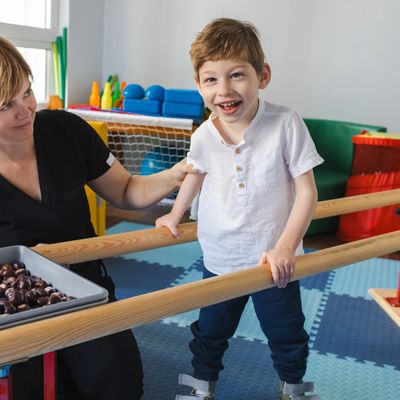
How Therapy Can Help

How Physical and Speech Therapy Support Children With Cerebral Palsy


Physical Therapy

Physical therapy plays a central role in helping children with cerebral palsy improve their movement, strength, and overall physical function. It focuses on building the skills children need for everyday activities while preventing complications as they grow.


How Physical Therapy Helps

  • Improves gross motor skills such as sitting, crawling, standing, and walking
  • Strengthens muscles and improves posture, helping children move with more control
  • Increases flexibility and range of motion, reducing stiffness and discomfort
  • Supports balance and coordination, making movement safer and more efficient
  • Helps manage spasticity through stretching, positioning, and guided exercises
  • Prevents long‑term issues like joint tightness or contractures
  • Promotes independence, allowing children to participate more fully at home and school


Therapists often use play‑based activities, adaptive equipment, and personalized exercise plans to help each child reach their highest level of physical ability.


Speech Therapy

Speech and language therapy helps children with cerebral palsy communicate more clearly and safely. Because CP can affect the muscles used for speaking, eating, and swallowing, speech therapy supports both communication and oral motor skills.


How Speech Therapy Helps

  • Improves speech clarity, making it easier for children to be understood
  • Builds language skills, including vocabulary, comprehension, and expressive communication
  • Strengthens oral motor control, supporting safer chewing, swallowing, and breathing
  • Introduces alternative communication tools (AAC) when needed, such as picture boards or speech‑generating devices
  • Boosts social confidence, helping children express their needs and connect with others


Speech therapy can also address feeding and swallowing challenges, helping reduce risks and making mealtimes more comfortable.


Why These Therapies Matter

Together, physical and speech therapy help children with cerebral palsy:

  • Build essential life skills
  • Improve comfort and safety
  • Strengthen communication and mobility
  • Increase independence and participation
  • Support long‑term health and development


Both therapies are most effective when tailored to each child’s unique strengths, challenges, and goals.


Experience the Empowerize Therapy Center Difference

At Empowerize Therapy Center, we're dedicated to providing exceptional care in a warm and welcoming environment. Our therapists are passionate about helping patients achieve their goals, and we use the latest techniques and technologies to ensure the best possible outcomes. Contact us today to learn more about how we can help!

Book Your Evaluation Now

Phone: (810) 772-7600

Fax: (810) 206-3165

Email: admin@empowerizetherapycenter.com


Copyright © 2026 Empowerize Therapy Center - All Rights Reserved.


Powered by

This website uses cookies.

We use cookies to analyze website traffic and optimize your website experience. By accepting our use of cookies, your data will be aggregated with all other user data.

Accept