

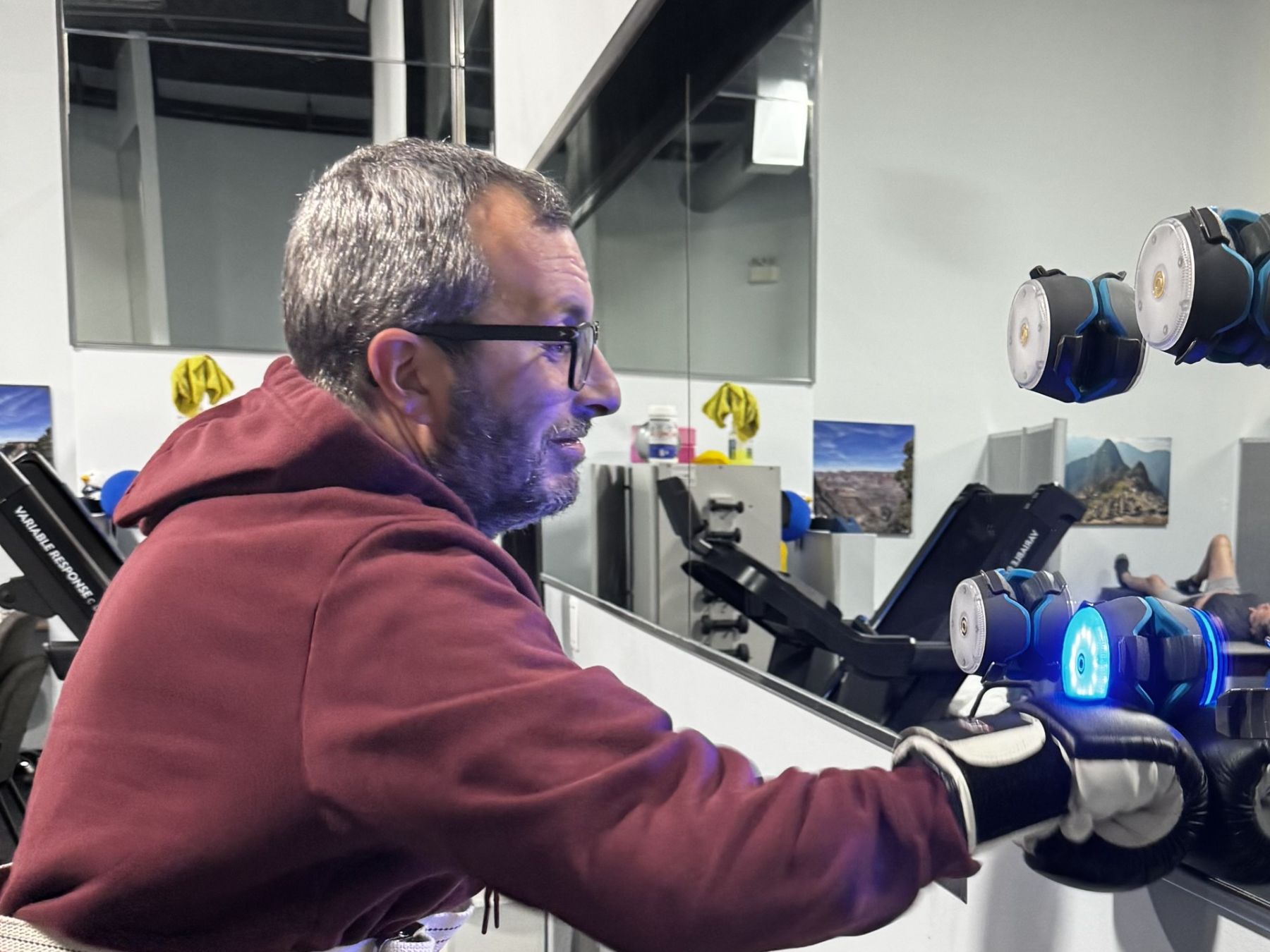
What is a stroke?
A stroke, also called a cerebrovascular accident (CVA), happens when blood flow to part of the brain is blocked or a blood vessel in the brain bursts. Without oxygen, brain cells in that area are damaged, which can affect movement, speech, thinking, and swallowing.
The effects depend on which part of the brain was involved and how large the injury was. Common changes include weakness on one side of the body, trouble speaking or understanding language, vision changes, balance problems, and changes in memory, mood, or emotions.
Recovery often continues for months and years. The brain can form new connections through repeated, purposeful practice, which is why consistent rehabilitation matters.
Types of stroke
- Ischemic stroke
- A clot or narrowed artery blocks blood flow to part of the brain. This is the most common type.
- Hemorrhagic stroke
- A blood vessel in or around the brain bursts and bleeds.
Common signs and challenges
- Weakness on one side of the body
- Trouble walking or poor balance
- Stiff or tight muscles
- Difficulty using an arm or hand
- Trouble finding words (aphasia)
- Slurred speech (dysarthria)
- Difficulty swallowing
- Memory and attention changes
How therapy may help
Every plan starts with an evaluation. Which disciplines are involved depends on your goals and what the evaluation shows.
Specialized approaches
What to expect at Empowerize
Your therapist works one-on-one with you or your child to build a customized treatment plan. We collaborate with your referring physician and give regular updates on your plan of care. Families and caregivers are included in goal setting and home strategies.
Questions families ask about a stroke
Is it too late to start therapy months or years after a stroke?
No. Many people continue to make progress long after a stroke. An evaluation will show which goals are realistic and how therapy may help now.
What is the difference between aphasia and dysarthria?
Aphasia affects language: finding words, understanding, or reading. Dysarthria affects the muscles used for speech, which can make speech slurred or quiet. A speech-language pathologist treats both.
Do you offer LSVT BIG and LSVT LOUD after a stroke?
Yes. Our clinicians are certified in both, and the programs can benefit people recovering from stroke as well as people with Parkinson's disease.