Empowerize Therapy Center
Home
Our Story
Our Services
  • Physical Therapy
  • Speech Therapy
  • Occupational Therapy
  • Personal Training
  • Dry Needling
Contact
Our Team
  • Our Team
  • Meet Alicia
  • Meet Caleb
  • Meet Sarah
  • Meet Lee
  • Meet Malia
Conditions
  • Autism Spectrum Disorder
  • Stroke (CVA)
  • Parkinson's Disease
  • Traumatic Brain Injury
  • Cerebral Palsy (CP)
  • Concussion
  • Developmental Delay
  • Spinal Cord Injury
  • Cognitive Impairment
  • Multiple Sclerosis
  • ALS
  • Apraxia
  • Dementia/ Alzheimer's
  • Torticollis
  • Down Syndrome
  • Dysphasia
  • Muscular Dystrophy
  • Brain Tumor
  • Rett Syndrome
Gallery
Learning Center
Empowerize Therapy Center
Home
Our Story
Our Services
  • Physical Therapy
  • Speech Therapy
  • Occupational Therapy
  • Personal Training
  • Dry Needling
Contact
Our Team
  • Our Team
  • Meet Alicia
  • Meet Caleb
  • Meet Sarah
  • Meet Lee
  • Meet Malia
Conditions
  • Autism Spectrum Disorder
  • Stroke (CVA)
  • Parkinson's Disease
  • Traumatic Brain Injury
  • Cerebral Palsy (CP)
  • Concussion
  • Developmental Delay
  • Spinal Cord Injury
  • Cognitive Impairment
  • Multiple Sclerosis
  • ALS
  • Apraxia
  • Dementia/ Alzheimer's
  • Torticollis
  • Down Syndrome
  • Dysphasia
  • Muscular Dystrophy
  • Brain Tumor
  • Rett Syndrome
Gallery
Learning Center
More
  • Home
  • Our Story
  • Our Services
    • Physical Therapy
    • Speech Therapy
    • Occupational Therapy
    • Personal Training
    • Dry Needling
  • Contact
  • Our Team
    • Our Team
    • Meet Alicia
    • Meet Caleb
    • Meet Sarah
    • Meet Lee
    • Meet Malia
  • Conditions
    • Autism Spectrum Disorder
    • Stroke (CVA)
    • Parkinson's Disease
    • Traumatic Brain Injury
    • Cerebral Palsy (CP)
    • Concussion
    • Developmental Delay
    • Spinal Cord Injury
    • Cognitive Impairment
    • Multiple Sclerosis
    • ALS
    • Apraxia
    • Dementia/ Alzheimer's
    • Torticollis
    • Down Syndrome
    • Dysphasia
    • Muscular Dystrophy
    • Brain Tumor
    • Rett Syndrome
  • Gallery
  • Learning Center
  • Home
  • Our Story
  • Our Services
    • Physical Therapy
    • Speech Therapy
    • Occupational Therapy
    • Personal Training
    • Dry Needling
  • Contact
  • Our Team
    • Our Team
    • Meet Alicia
    • Meet Caleb
    • Meet Sarah
    • Meet Lee
    • Meet Malia
  • Conditions
    • Autism Spectrum Disorder
    • Stroke (CVA)
    • Parkinson's Disease
    • Traumatic Brain Injury
    • Cerebral Palsy (CP)
    • Concussion
    • Developmental Delay
    • Spinal Cord Injury
    • Cognitive Impairment
    • Multiple Sclerosis
    • ALS
    • Apraxia
    • Dementia/ Alzheimer's
    • Torticollis
    • Down Syndrome
    • Dysphasia
    • Muscular Dystrophy
    • Brain Tumor
    • Rett Syndrome
  • Gallery
  • Learning Center

What is Rett Syndrome?

About Rett Syndrome

Rett syndrome is a rare neurological disorder that mostly affects girls and begins after a period of typical early development. Babies usually grow and learn normally for the first several months, then gradually lose skills they had gained, such as purposeful hand use, speech, or coordinated movement. Many children develop repetitive hand motions, trouble walking, slowed growth, and challenges with communication. Rett syndrome is caused by a genetic change that affects how the brain develops, but it isn’t usually inherited. While there is no cure, treatments like therapy, medications for specific symptoms, and supportive care can help children stay as healthy and comfortable as possible. With ongoing care, many individuals with Rett syndrome live into adulthood. 
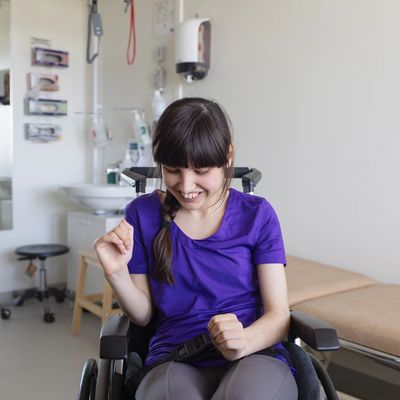
How Therapy Can Treat Rett Syndrome

Physical therapy and speech‑language therapy play an important role in helping individuals with Rett syndrome stay as active, comfortable, and connected as possible. 


Physical therapy focuses on keeping the body moving—helping maintain mobility, improve balance, and support walking skills for those who can walk. Therapists also work on flexibility and posture, which can reduce discomfort and help slow the progression of issues like muscle tightness or scoliosis. These sessions often include gentle strengthening, stretching, and guided movement to help children use their bodies in the safest and most effective ways.


Speech‑language therapy supports communication, even when spoken words are limited or lost. A speech‑language pathologist helps children learn alternative ways to express themselves, such as eye‑gaze systems, picture‑based tools, or other assistive communication devices. Therapy also supports social interaction skills and can help with feeding and swallowing challenges, which are common in Rett syndrome. Together, these therapies give children more ways to participate in daily life and help families better understand and respond to their child’s needs.

Schedule and Evaluation Today

Contact us today to schedule an evaluation with one of our expert speech-language pathologist and physical therapists. We'll help you achieve your goals!

Schedule Now

Phone: (810) 772-7600

Fax: (810) 206-3165

Email: admin@empowerizetherapycenter.com


Copyright © 2026 Empowerize Therapy Center - All Rights Reserved.


Powered by

This website uses cookies.

We use cookies to analyze website traffic and optimize your website experience. By accepting our use of cookies, your data will be aggregated with all other user data.

Accept