

Neuro rehab
Intensive Physical Therapy in Brighton, MI: TheraSuit, DMI & Specialized Rehabilitation
Three Hours a Day. Five Days a Week. Four to Six Weeks Focused on Movement, Strength, and Meaningful Progress.
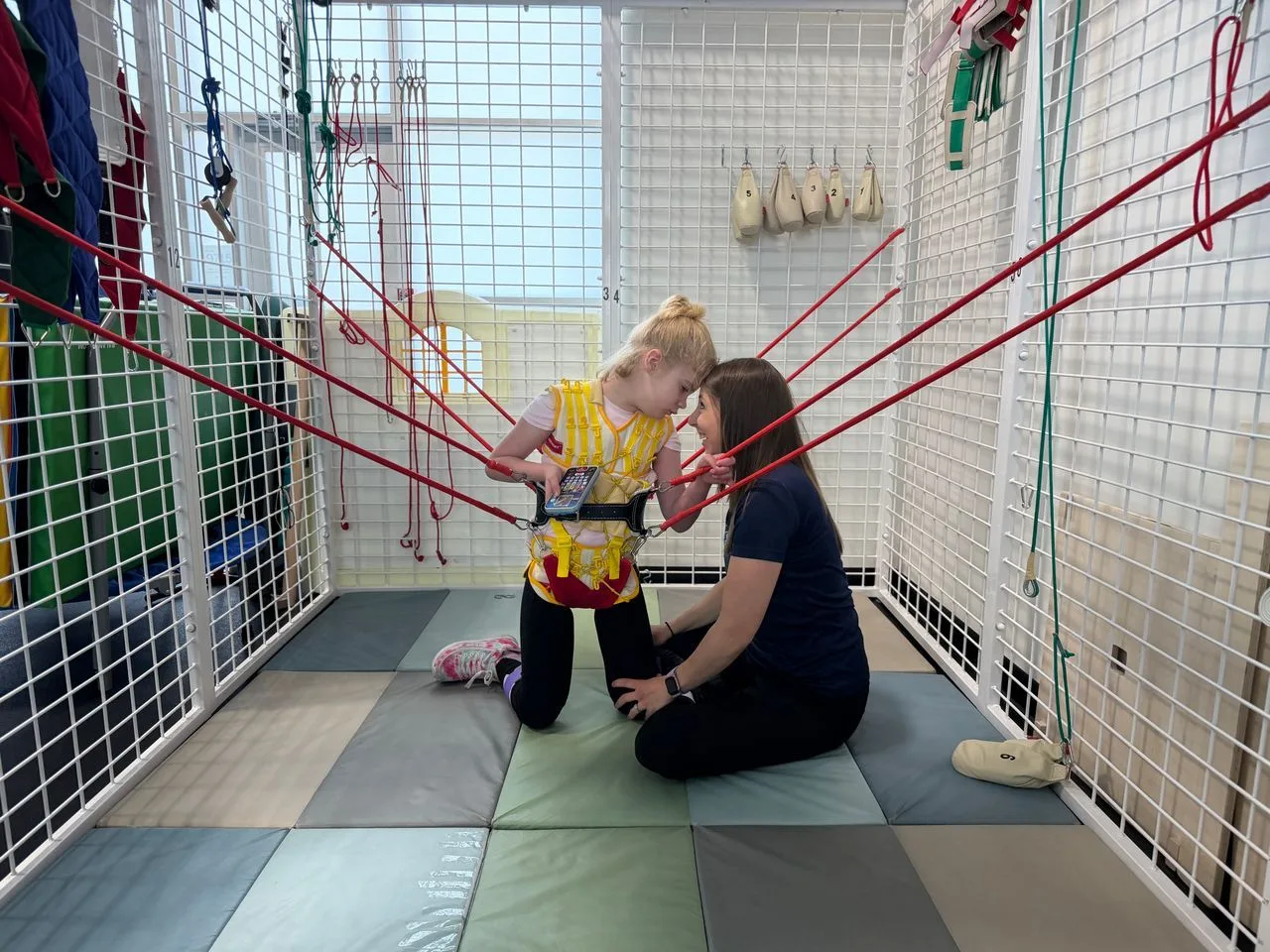
Every movement matters.
For a child with cerebral palsy, progress might mean sitting independently for the first time. For someone with hypotonia, it might mean developing the strength and stability needed to stand or walk. For an adult recovering from a neurological injury, it could mean improving balance, walking more confidently, or becoming more independent with everyday activities.
At Empowerize Therapy Center in Brighton, Michigan, we believe every person deserves the opportunity to work toward their fullest potential, regardless of age, diagnosis, or current abilities.
That's why we offer a specialized Intensive Physical Therapy Program featuring the TheraSuit Method, Dynamic Movement Intervention (DMI), Universal Exercise Unit (UEU), and advanced therapeutic technologies.
Designed for children and adults with neurological, developmental, and movement-related challenges, our program provides three hours of individualized therapy per day, five days per week, for four to six weeks.
By combining concentrated therapeutic practice with specialized equipment and individualized treatment plans, we help patients work toward meaningful goals in strength, balance, coordination, motor control, and functional mobility.
Interested in learning whether intensive physical therapy could be right for you or your child?
Contact Empowerize Therapy Center to learn more about our intensive therapy program.
What Is Intensive Physical Therapy?
Intensive physical therapy is a rehabilitation approach that provides more frequent and concentrated therapy sessions over a defined period.
Traditional outpatient physical therapy often involves one or two appointments per week. While this approach can be effective for many patients, some individuals may benefit from additional opportunities to practice specific movements, develop motor skills, and work toward functional goals.
At Empowerize Therapy Center, our intensive program follows a structured schedule:
- 3 hours of therapy per day
- 5 days per week
- 4–6 consecutive weeks
- 60–90 hours of scheduled therapeutic intervention
Rather than spreading treatment over several months, intensive therapy creates a concentrated period of individualized movement practice.
This approach allows therapists to work on specific goals, monitor how patients respond, and adjust therapeutic activities throughout the program.
Sessions incorporate appropriate rest breaks, modifications, and individualized pacing based on each patient's abilities and tolerance.
Why Does Repetition Matter in Physical Therapy?
Learning and improving movement skills often requires repeated practice.
Whether someone is learning to sit, stand, walk, transfer between positions, or improve balance, practicing meaningful movements provides opportunities to develop coordination and motor control.
Intensive physical therapy emphasizes purposeful repetition.
Instead of simply completing exercises, patients practice movements connected to real-life activities and personal goals.
For example, a child working toward independent standing might practice strengthening, weight shifting, balance, and transitions throughout the program.
An adult working toward safer walking might focus on lower-body strength, postural stability, balance reactions, and functional mobility.
The goal isn't simply to complete more therapy hours. It's to make each session meaningful.
Four Specialized Approaches to Intensive Physical Therapy
One of the distinguishing features of Empowerize's intensive therapy program is the ability to incorporate several specialized treatment approaches.
Each offers different tools for addressing movement, stability, coordination, and functional independence.
Not every patient requires every intervention. Our therapists select appropriate activities and equipment based on individual needs, clinical considerations, and treatment goals.
1. Universal Exercise Unit (UEU): Strength, Balance, and Movement Control
The Universal Exercise Unit, sometimes called the Spider Cage, is a specialized rehabilitation system that allows therapists to provide customized support and resistance during therapeutic exercises.

Using elastic cords, pulleys, and suspension equipment, the UEU can help patients practice movements that might otherwise be difficult to perform independently.
For example, a patient who struggles to maintain an upright position may practice standing or weight shifting with additional support.
As their abilities change, therapists can adjust the level of assistance or resistance.
The Universal Exercise Unit may be incorporated into therapy to address:
- Core strength and trunk stability
- Postural control and body alignment
- Balance and coordination
- Weight bearing and weight shifting
- Upper- and lower-body strengthening
- Sitting, kneeling, and standing
- Transitions between positions
- Supported stepping and walking activities
The UEU is particularly versatile because it allows therapists to modify the environment around the patient.
This can create opportunities for active movement practice while providing individualized support.
2. TheraSuit Method: Supporting Posture and Functional Movement
The TheraSuit is a specialized soft dynamic orthotic suit designed to provide external support and proprioceptive input during therapeutic activities.
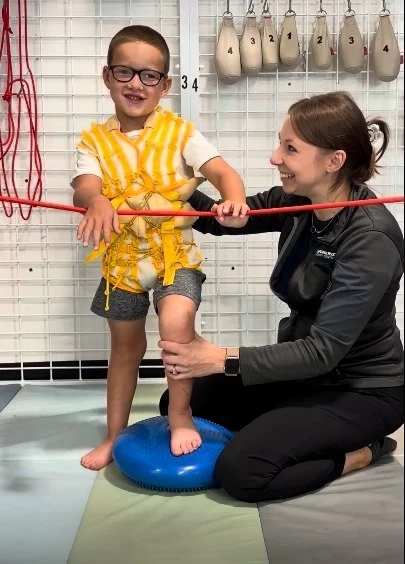
Proprioception is the body's ability to recognize its position and movement in space.
This sense plays an important role in balance, coordination, posture, and movement control.
The TheraSuit uses adjustable elastic components that connect different areas of the body. Therapists can modify these components based on an individual's movement patterns and therapeutic goals.
When incorporated into a structured rehabilitation program, the TheraSuit may be used during activities targeting:
- Postural alignment
- Body awareness and proprioception
- Core and trunk stability
- Muscle coordination
- Balance and postural control
- Movement symmetry
- Functional movement practice
The TheraSuit Method combines specialized equipment with individualized strengthening and functional movement exercises.
Rather than relying on the suit alone, therapists incorporate it into activities designed around the patient's needs and goals.
Who can participate in TheraSuit therapy?
TheraSuit-based rehabilitation may be considered for both children and adults with neurological or neuromotor challenges.
An individualized assessment helps determine whether the suit and related exercises are appropriate for a particular patient.
3. Dynamic Movement Intervention (DMI): Developing Active Motor Responses
Dynamic Movement Intervention, commonly called DMI, is a specialized therapeutic approach used in pediatric physical and occupational therapy.
DMI focuses on encouraging active motor responses through carefully selected, progressively challenging movements.
During treatment, a therapist provides specific movement challenges designed to encourage a child to actively respond, adjust their posture, and develop greater movement control.
Rather than passively moving a child through an exercise, DMI emphasizes active participation.
DMI activities may focus on developing:
- Head and trunk control
- Postural stability
- Balance and protective reactions
- Sitting balance
- Rolling and transitional movements
- Weight shifting
- Standing balance
- Stepping and functional mobility
For example, a child who has difficulty maintaining an upright sitting position may participate in exercises designed to encourage active postural responses.
A child working toward standing may practice movements that challenge balance, alignment, and lower-body control.
DMI exercises are individualized based on the child's developmental abilities, movement patterns, and therapeutic goals.
How is DMI different from traditional physical therapy?
DMI is not simply a more intensive version of conventional physical therapy.
It is a specific therapeutic approach that uses structured movement challenges to encourage active motor responses.
These activities may be incorporated into a broader physical therapy program alongside strengthening, balance training, functional movement practice, and other appropriate interventions.
4. LZ30 Avant Laser: An Additional Therapeutic Option
Empowerize Therapy Center also offers the LZ30 Avant Laser as an additional treatment option when clinically appropriate.
This technology uses photobiomodulation, sometimes called low-level laser therapy.
Photobiomodulation involves applying specific wavelengths of light to biological tissues.
Depending on the device, treatment parameters, and clinical application, photobiomodulation may be used as an adjunctive therapy for certain conditions.
At Empowerize, laser therapy is considered separately from the active movement, strengthening, and functional training that form the foundation of our intensive rehabilitation program.
Laser therapy is not required for every patient, and its use depends on an individualized clinical assessment.
Our goal is to select therapeutic interventions that are appropriate for each person's specific needs rather than apply the same treatments to everyone.
TheraSuit vs. DMI: What's the Difference?
Although TheraSuit and Dynamic Movement Intervention may both be incorporated into intensive rehabilitation programs, they are not the same treatment.
TheraSuit uses specialized dynamic orthotic equipment during therapeutic exercises to provide external support and proprioceptive input.
Dynamic Movement Intervention uses therapist-directed movement challenges to encourage active motor responses and support the development of functional movement skills in children.
Both approaches may be incorporated into a comprehensive treatment plan, but they serve different purposes.
| Feature | TheraSuit | Dynamic Movement Intervention (DMI) |
|---|---|---|
| Primary approach | Specialized dynamic orthotic suit used during therapeutic activities | Therapist-directed movement exercises |
| Main focus | External support, proprioceptive input, and movement practice | Active motor responses and functional movement development |
| Equipment | TheraSuit with adjustable elastic components | Therapist support and specialized exercise equipment as appropriate |
| Typical applications | Postural control, coordination, strengthening, and functional movement | Head and trunk control, transitions, balance, and developmental motor skills |
| Patient population | Children and adults when clinically appropriate | Primarily children with motor delays or impairments |
Why Might Both Approaches Be Used?
Different therapeutic activities address different aspects of movement.
For example, a child's treatment program might include:
- Strengthening exercises using the Universal Exercise Unit
- Functional movement activities incorporating the TheraSuit
- DMI exercises targeting active postural responses
- Repeated practice of sitting, standing, or walking skills
By selecting appropriate interventions, therapists can develop a coordinated program around the child's individual goals.
The purpose is not to use every available technique.
It's to identify which activities are most appropriate for the patient and how they can work together within a personalized treatment plan.
Who May Benefit From Intensive Physical Therapy?
Intensive physical therapy may be considered for children and adults experiencing neurological, developmental, or movement-related challenges.
The appropriate treatment approach depends on the individual's diagnosis, medical history, functional abilities, goals, and tolerance for therapy.
Intensive Physical Therapy for Cerebral Palsy
Cerebral palsy affects movement, posture, and muscle coordination.
Some individuals experience challenges with balance, strength, motor control, or functional mobility.
Intensive physical therapy may provide opportunities to practice activities such as:
- Sitting with improved postural control
- Transitioning between positions
- Standing and weight bearing
- Improving balance and coordination
- Practicing stepping and walking
- Developing greater independence with daily movement
Treatment goals vary depending on the individual's abilities and needs.
For one child, meaningful progress may involve maintaining head control for longer periods.
For another, it may involve improving walking efficiency or completing transfers with less assistance.
Intensive Physical Therapy for Hypotonia
Hypotonia refers to decreased muscle tone.
Children and adults with hypotonia may experience difficulty maintaining posture, stabilizing their bodies, or completing movements that require sustained muscle activity.
An individualized therapy program may incorporate exercises targeting:
- Core and trunk stability
- Muscle strength
- Postural endurance
- Balance and coordination
- Sitting and standing control
- Functional mobility
The goal is to improve movement skills and participation in meaningful daily activities.
Intensive Physical Therapy for Developmental Delays
Children with gross motor developmental delays may need additional support developing movement skills.
Depending on the child's abilities, therapy may focus on:
- Head and trunk control
- Rolling and sitting
- Crawling and transitional movements
- Pulling to stand
- Standing balance
- Walking and functional mobility
Intensive therapy provides a structured opportunity to practice these skills through individualized activities.
Intensive Rehabilitation for Neurological Conditions
Neurological and genetic conditions can affect movement in different ways.
Some individuals experience difficulties with coordination, strength, balance, muscle tone, or motor planning.
A physical therapist can evaluate these challenges and establish functional goals based on the patient's specific abilities and needs.
Intensive Physical Therapy for Adults
Intensive physical therapy isn't just for children.
Adults experiencing neurological or neuromotor challenges may also be candidates for a concentrated rehabilitation program.
Potential areas of treatment include movement difficulties associated with:
- Stroke
- Traumatic brain injury
- Spinal cord injury
- Neurological disorders
- Balance and coordination impairments
- Functional mobility limitations
Depending on the individual's condition, therapy may focus on improving balance, strength, transfers, walking, postural control, and everyday movement.
Adult treatment programs are individualized and may use different interventions than those commonly incorporated into pediatric therapy.
An evaluation helps determine whether intensive therapy is appropriate and which therapeutic approaches may be beneficial.
What to Expect During an Intensive Physical Therapy Program
Beginning a new therapy program can raise many questions.
What happens during a session? How are goals established? Will therapy be too physically demanding?
At Empowerize, intensive therapy is designed around the individual.
Step 1: Understanding Your Needs and Goals
The process begins with understanding the patient's current abilities, challenges, medical history, and functional goals.
For a child, this may involve discussing developmental milestones and everyday activities with parents or caregivers.
For an adult, goals might include improving walking, balance, transfers, or independence with daily tasks.
The evaluation helps determine whether intensive rehabilitation is appropriate.
Step 2: Developing an Individualized Treatment Plan
Our therapists select exercises and treatment approaches based on the patient's needs.
A treatment plan may incorporate strengthening, balance exercises, functional movement practice, and specialized therapeutic equipment.
Not every patient uses the same equipment or follows the same activities.
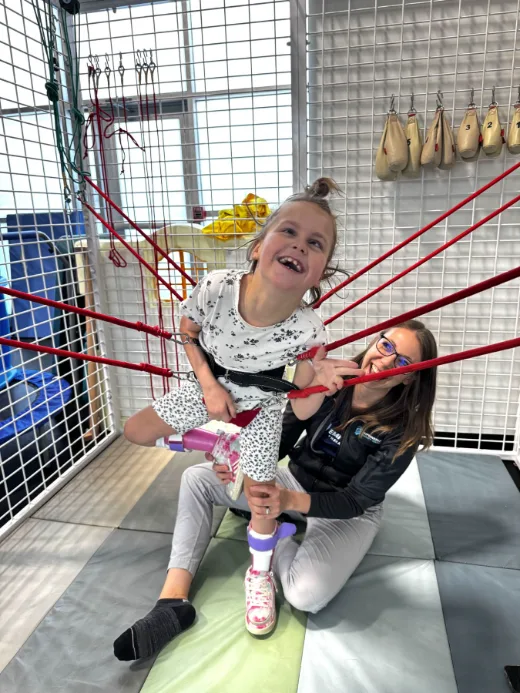
Step 3: Participating in Daily Therapy Sessions
Empowerize's intensive therapy program is structured around three-hour daily sessions, five days per week.
Throughout each session, therapeutic activities are selected and modified based on the patient's abilities, goals, and tolerance.
Appropriate rest breaks and adjustments are incorporated as needed.
Some activities may emphasize strengthening, while others focus on balance, postural responses, transitions, or functional mobility.
Step 4: Monitoring Progress
As therapy continues, therapists observe how patients respond to different activities.
Exercises and challenges can be modified to reflect changing abilities and treatment needs.
Progress is evaluated in relation to the functional goals established for the individual.
Step 5: Planning for Continued Progress
An intensive program is one part of a broader rehabilitation journey.
Following the intensive period, patients may continue with traditional outpatient physical therapy or other appropriate activities based on their ongoing needs.
The goal is to support continued participation in meaningful movements and everyday activities.
What Does Research Say About Intensive Physical Therapy?
Research suggests that repeated, goal-directed movement practice can play an important role in improving functional skills for some individuals with neurological and movement-related conditions.
For example, a 2024 systematic review and meta-analysis published in Developmental Medicine & Child Neurology examined intensive, task-oriented mobility training for children with cerebral palsy.
The review included 46 studies involving 1,449 participants and found improvements in several mobility-related outcomes. However, the researchers could not determine a universal minimum effective therapy dose because the studies varied considerably.
International clinical practice guidelines for cerebral palsy also emphasize individualized goals, meaningful task practice, and patient and family participation.
These findings support the value of purposeful, goal-directed movement practice.
However, the research supporting intensive rehabilitation should not be interpreted as proof that every specialized therapy or device produces the same results.
Evidence varies among treatment approaches, including therapeutic suits, DMI, and photobiomodulation.
At Empowerize, individualized clinical judgment, patient needs, functional goals, and treatment tolerance guide therapeutic decisions.
No particular outcome can be guaranteed, and the most appropriate program depends on each patient's individual circumstances.
What Does Progress Look Like?
One of the most important things to understand about intensive therapy is that progress looks different for everyone.
Sometimes progress involves a major milestone, such as taking independent steps.
Other times, the changes are smaller but equally meaningful.
Progress might mean:
- Holding the head upright for longer periods
- Sitting with less assistance
- Maintaining better balance while standing
- Completing a transition with greater control
- Taking more coordinated steps
- Improving endurance during everyday activities
- Requiring less assistance with certain movements
- Participating more comfortably in daily routines
For a parent, watching a child gain a new movement skill can be incredibly meaningful.
For an adult, improving the ability to complete an everyday activity may represent an important step toward greater independence.
At Empowerize, we recognize that progress is personal.
Our focus is on helping each patient work toward functional goals that matter to them and their family.
Frequently Asked Questions About Intensive Physical Therapy
How long is the intensive physical therapy program?
Empowerize's intensive therapy program provides three hours of scheduled therapy per day, five days per week, for four to six weeks.
This represents approximately 60–90 hours of scheduled therapeutic intervention.
Sessions include appropriate modifications and rest breaks based on individual needs.
Is intensive physical therapy available for adults and children?
Yes. Empowerize offers intensive physical therapy for both children and adults.
Treatment plans are individualized based on age, diagnosis, abilities, functional goals, and clinical appropriateness.
Certain interventions, such as Dynamic Movement Intervention, are primarily used in pediatric therapy.
What is the difference between intensive therapy and traditional physical therapy?
Traditional outpatient physical therapy commonly involves one or two appointments per week.
Intensive therapy provides more frequent sessions over a concentrated period.
This creates additional opportunities for individualized movement practice, strengthening, balance training, and functional skill development.
The best approach depends on the patient's needs and treatment goals.
Is TheraSuit therapy the same as DMI?
No.
TheraSuit involves a specialized dynamic orthotic suit used during therapeutic exercises.
Dynamic Movement Intervention uses structured, therapist-directed exercises designed to encourage active motor responses in children.
Both may be incorporated into an individualized pediatric rehabilitation program when appropriate.
What conditions may be appropriate for intensive physical therapy?
Potential candidates may include individuals with cerebral palsy, hypotonia, developmental delays, neurological disorders, brain injuries, stroke-related impairments, and other movement-related conditions.
However, diagnosis alone does not determine eligibility.
An individualized evaluation is necessary to determine whether intensive therapy is appropriate.
Is intensive physical therapy appropriate for every patient?
No.
Some individuals may benefit from concentrated therapy, while others may be better suited to traditional outpatient treatment or a different rehabilitation approach.
Medical considerations, physical tolerance, functional abilities, and individual goals all influence treatment recommendations.
Does intensive physical therapy guarantee results?
No therapy program can guarantee a specific outcome.
Progress depends on many factors, including the patient's diagnosis, medical history, current abilities, individual goals, and response to treatment.
At Empowerize, our goal is to provide individualized therapeutic opportunities that support meaningful movement practice and functional progress.
Can intensive therapy be combined with regular physical therapy?
Yes.
Intensive rehabilitation may complement an ongoing physical therapy program.
Some patients continue with traditional outpatient physical therapy after completing an intensive program.
Treatment recommendations depend on individual needs and goals.
How do I know whether intensive therapy is right for my child?
The best starting point is a conversation with a qualified therapy professional.
A physical therapist can review your child's medical and developmental history, evaluate current movement abilities, discuss goals, and determine whether an intensive program may be appropriate.
Does insurance cover intensive physical therapy?
Insurance coverage depends on the patient's specific plan, covered services, medical necessity requirements, and other policy provisions.
Families and individuals should contact Empowerize Therapy Center to discuss available payment and insurance information before beginning a program.
How much does intensive physical therapy cost?
Costs may depend on the recommended treatment plan, program duration, and applicable insurance benefits.
Contact Empowerize Therapy Center to discuss program details and available financial information.
Intensive Physical Therapy in Brighton, Michigan
Finding specialized physical therapy services can be challenging, especially when you're looking for treatment approaches beyond traditional outpatient rehabilitation.
Empowerize Therapy Center offers intensive physical therapy in Brighton, Michigan, serving children and adults in Livingston County and surrounding communities.
Our program incorporates specialized therapeutic approaches, including:
- TheraSuit Method
- Universal Exercise Unit
- Dynamic Movement Intervention
- Individualized strengthening and functional movement training
- Additional therapeutic technologies when clinically appropriate
We believe meaningful rehabilitation begins with understanding the person behind the diagnosis.
That means taking the time to learn about each patient's abilities, challenges, and goals before determining the most appropriate treatment approach.
Whether you're a parent exploring specialized physical therapy for your child or an adult seeking additional rehabilitation options, our team is here to help you understand what's available.
Explore Intensive Physical Therapy at Empowerize Therapy Center
Every person has different abilities. Every goal is personal. And every milestone matters.
At Empowerize Therapy Center, we're committed to providing individualized therapy that supports meaningful movement, participation, and functional independence.
Our intensive physical therapy program brings together specialized rehabilitation techniques, individualized treatment planning, and dedicated therapy time.
Whether the goal is improving sitting balance, developing motor skills, strengthening postural control, or practicing greater independence with everyday activities, we work with patients and families to identify meaningful goals.
Ready to learn more about intensive physical therapy?
Contact Empowerize Therapy Center in Brighton, Michigan, to discuss our TheraSuit Intensive Therapy Program and determine whether an evaluation may be appropriate for you or your child.
Empowerize Therapy Center | Brighton, Michigan
Helping children and adults work toward meaningful movement, greater independence, and their fullest potential.
About the Clinical Reviewer
Clinically Reviewed by Alicia Hisey, PT, DPT, NCS
Owner, Empowerize Therapy Center | Board-Certified Neurologic Clinical Specialist
Alicia Hisey is a Doctor of Physical Therapy and Board-Certified Neurologic Clinical Specialist with over eight years of clinical experience in pediatric and adult neurological rehabilitation. She specializes in helping individuals with cerebral palsy, developmental delays, stroke, traumatic brain injury, spinal cord injuries, and other neurological conditions improve functional mobility and independence.
Alicia is certified in the TheraSuit Method® and Dynamic Movement Intervention (DMI), incorporating specialized rehabilitation techniques, task-specific training, and sensory integration strategies into individualized treatment programs.
As the owner of Empowerize Therapy Center in Brighton, Michigan, Alicia is dedicated to providing personalized, goal-driven rehabilitation that helps children and adults work toward meaningful improvements in movement, function, and quality of life.
Research and Professional Resources
This article is provided for educational purposes and is not a substitute for individualized medical evaluation or treatment recommendations.