Four weeks of focused, one-on-one practice, built around your goals
Intensive physical therapy at Empowerize is a four-week program of one-on-one physical therapy: 3 hours a day, 5 days a week, for 60 scheduled hours. It combines goal-focused practice with the TheraSuit Method, Dynamic Movement Intervention (DMI), and cold laser therapy, led by Alicia Hisey, PT, DPT, NCS, at our clinic in Brighton, Michigan.
Sessions are paced to each person. The 60 hours are scheduled time with your therapist, not 60 hours of nonstop exercise.
The basics
What is intensive physical therapy?
Most physical therapy happens once or twice a week, spread over months. An intensive puts a large amount of therapy into a short block of time. Over four weeks, a child or adult gets many more chances to practice the movements they are working on, with a physical therapist choosing, guiding, and adjusting every activity.
The idea behind it has good support. For children with cerebral palsy, research reviews support training built around the child's own goals, with plenty of repetition and variety, as the standard of care for improving motor skills. An intensive is one way to fit that much practice into a short time.
An intensive is not right for everyone, and it does not replace ongoing weekly therapy. Some people do best with weekly sessions, some with an intensive block, and some with both at different times.
What's included
Three therapies in one program
Each one is a tool inside a plan built on goal-focused practice. Here is what each involves and what the research says about it.
The TheraSuit Method is an intensive exercise program built around a soft, adjustable suit. It was developed by Richard and Izabela Koscielny, and the company that trains therapists in the method is based in Suttons Bay, Michigan.
What is the suit?
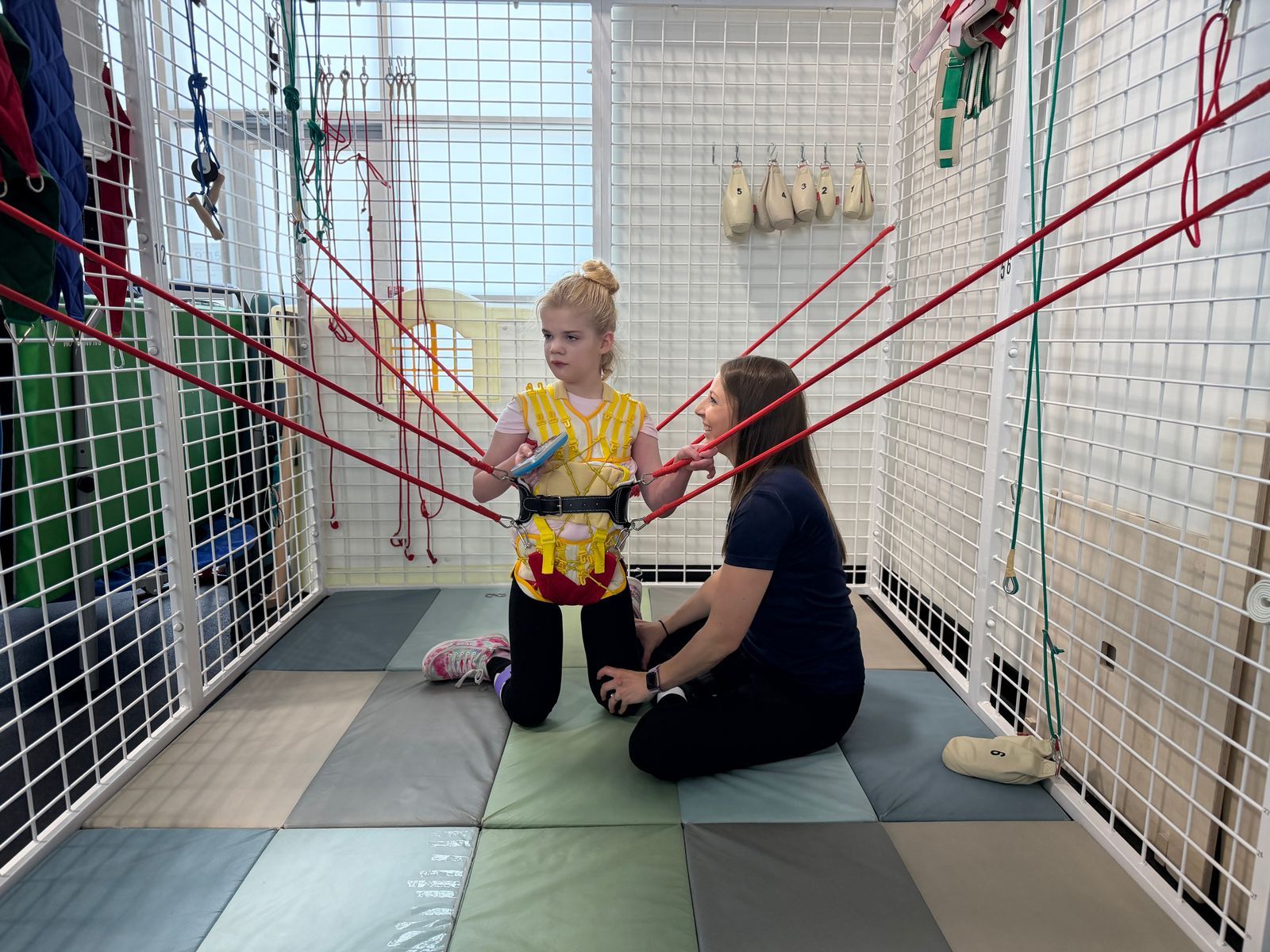
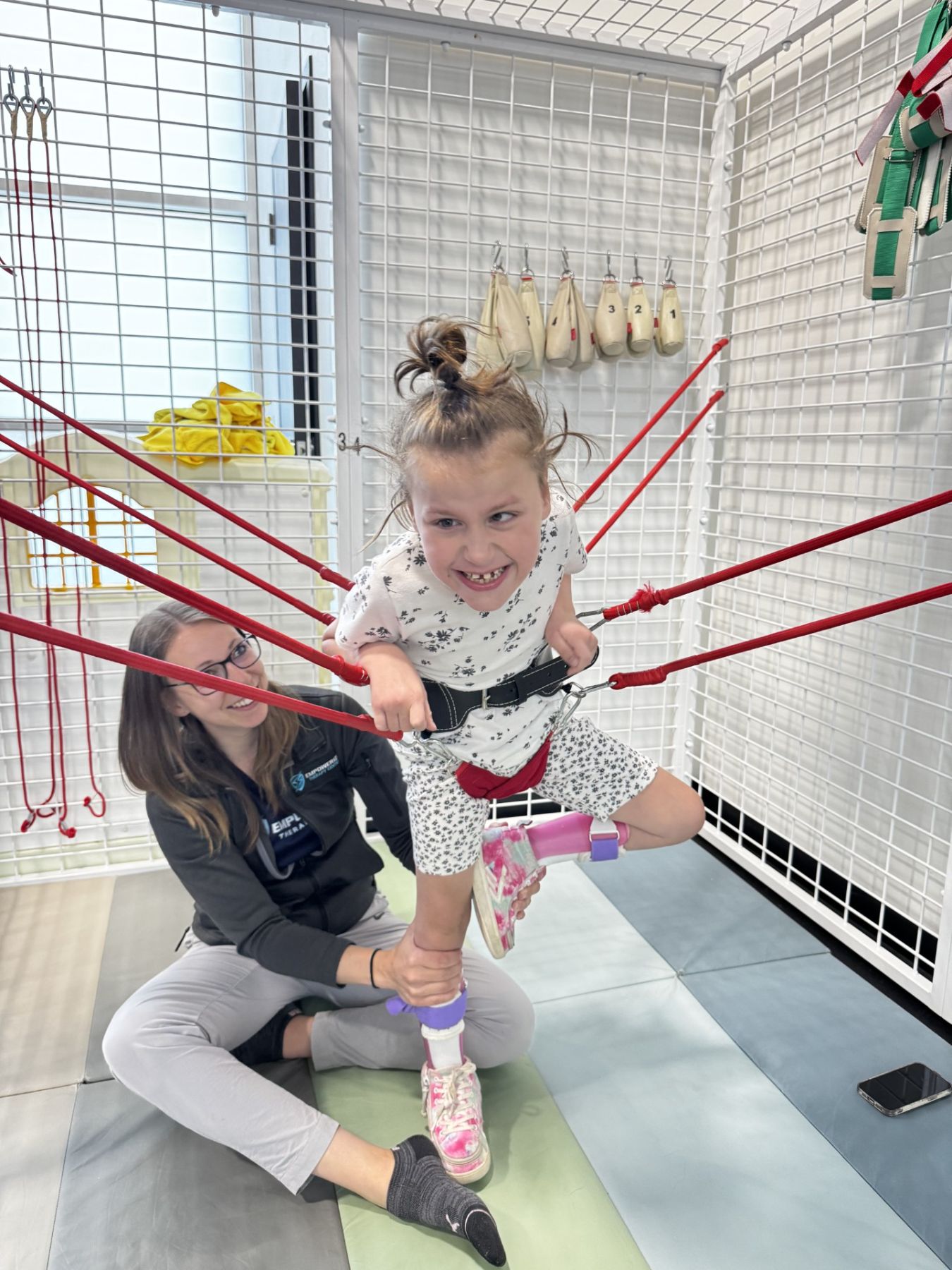
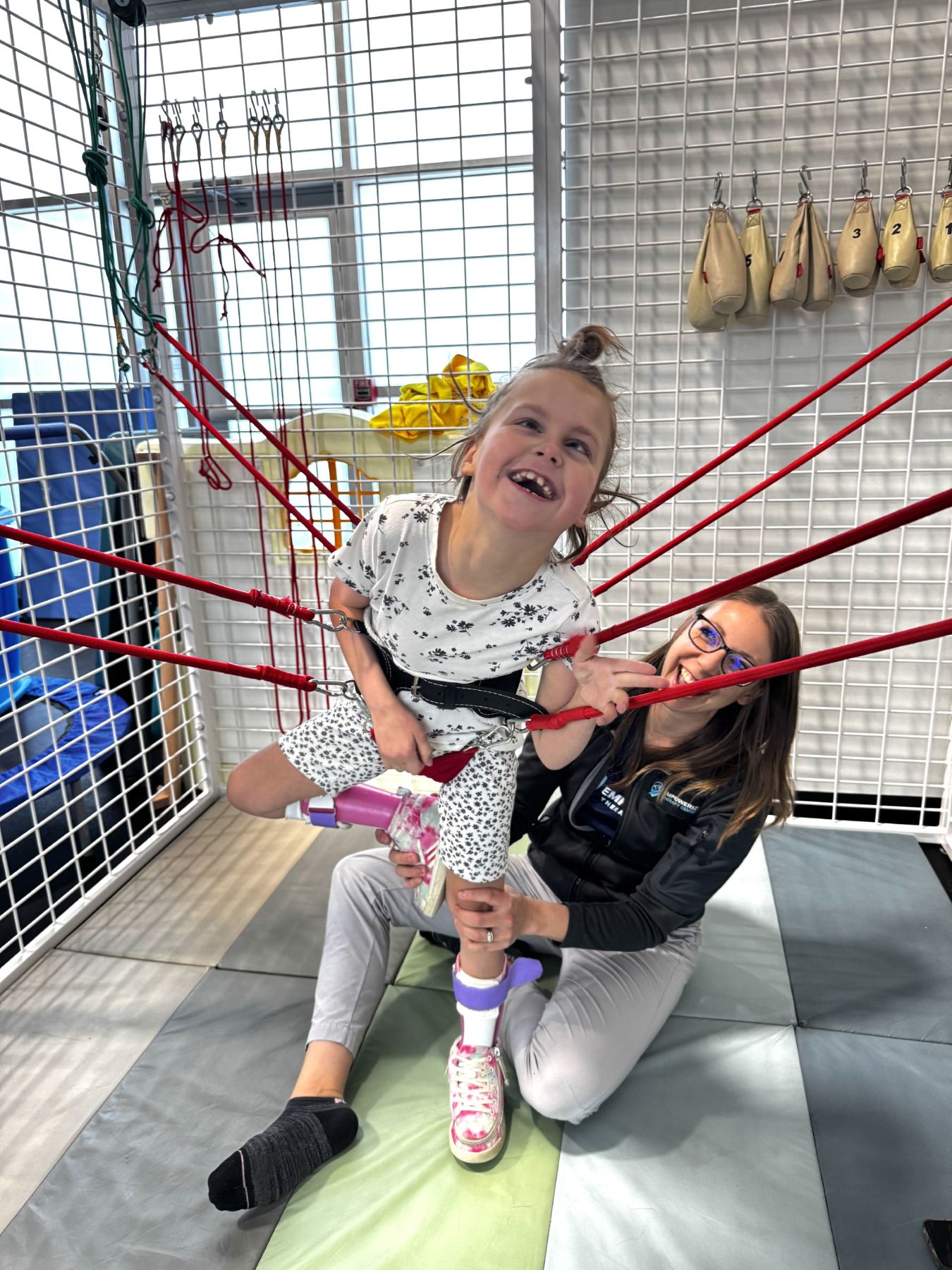
The suit is a vest, shorts, knee pads, and shoes connected by elastic cords. The therapist adjusts the cords to hold the trunk and legs in better alignment and to add gentle resistance while the person moves. It is worn during therapy, not all day.
What happens in a session?
The suit is one part of the session. The work itself is exercise: strengthening, balance and coordination, posture, transitions such as sitting to standing, and walking practice. The therapist picks each activity, repeats it enough for practice to build, and makes it harder as the person is ready. Our clinic also has a Universal Exercise Unit, a frame with pulleys, weights, and elastic cords used for strengthening and supported positions.
Who may it help?
TheraSuit is used most often with children who have cerebral palsy, and also with children and adults who have other neurological conditions, developmental delays, low muscle tone (hypotonia), or coordination challenges. Whether it fits depends on the evaluation, medical history, and goals, not the diagnosis alone.
02
Dynamic Movement Intervention (DMI)
Dynamic Movement Intervention, or DMI, is a hands-on physical therapy method for babies and children who are behind on gross motor skills, such as holding up their head, sitting, standing, and walking.
How does DMI work?
The therapist chooses exercises that ask the child to respond to movement with their own muscles: catching their balance, holding their head and trunk upright, or taking weight through their legs. Many exercises work against gravity. The therapist holds the child at a point that gives just enough support, then gradually moves that support farther away so the child does more of the work.
What does a session look like?
Sessions move through many short exercises on a treatment table or the floor. Each exercise is repeated a few times, and exercises carry over from session to session until the movement becomes easier and more automatic. The therapist watches closely and adjusts based on how the child responds.
Who may it help?
DMI is designed for children with motor delays, including children with Down syndrome, cerebral palsy, hypotonia, genetic conditions, or a history of premature birth. It is not used with children who have brittle bone conditions such as osteogenesis imperfecta. Whether it fits depends on the evaluation.
03
Cold laser therapy (photobiomodulation)
Cold laser therapy, also called low-level laser therapy or photobiomodulation, uses red and near-infrared light at low power. It does not cut or burn tissue the way surgical lasers do.
What device do we use?
We use the Avant LZ30 Pro Z, a small handheld Class 3B laser with a red (637 nm) and an infrared (808 nm) light source. Avant's LZ30 lasers are FDA-cleared for temporary relief of minor muscle and joint pain, stiffness, and muscle spasm, for a temporary increase in local blood circulation, and for temporary muscle relaxation.
How is it used in the program?
Cold laser is used for some people in the program, not everyone. Alicia may use it for muscle tightness or spasm and to increase local circulation. She also completed neuromotor training in photobiomodulation through Infinity Lasers in 2026 and may include it in a plan aimed at neurological or motor goals, as an add-on to physical therapy.
What is a session like?
The therapist holds the laser over the treatment area for a short time. Most people feel nothing or mild warmth. Because it is a Class 3B laser, everyone in the room wears protective eyewear, and the light is never pointed at the eyes.
One plan
How do the three therapies work together?
Goal-focused practice
Every day centers on active, one-on-one exercise aimed at the goals set at your evaluation.
TheraSuit
Used for supported strengthening, balance, and functional practice such as standing, transitions, and walking.
DMI
Used to build postural control and gross motor skills, especially for children working on head, trunk, sitting, and standing control.
Cold laser
Added for some people when Alicia judges it appropriate, as a supporting treatment.
How much time goes to each part, and in what order, is planned for each person after the evaluation. Not everyone uses all three.
A look inside an intensive session at our Brighton clinic.
Evidence
What does the research say about intensive therapy?
We want families to have the full picture. Some parts of the program have strong research behind them. Others are newer and still being studied.
Strong evidence
Goal-focused practice with lots of repetition
For children with cerebral palsy, large reviews of the research support training that targets the child's own goals with plenty of repetition and variety. This is the foundation of the program.
A 2016 review of the best available studies found small, inconsistent effects on gross motor function. A 2011 randomized trial found children did as well in an intensive program wearing a control suit as wearing the full TheraSuit.
Avant's LZ30 lasers are FDA-cleared for temporary relief of minor muscle and joint pain, stiffness, and spasm, and to temporarily increase local circulation. For children with cerebral palsy, studies are few and small, and a 2025 pilot trial for spasticity found no difference between groups.
This summary is general education, not medical advice. Research results describe groups of people and cannot predict how any one person will respond.
Is it a fit?
Who may be a candidate for intensive physical therapy?
We offer the program to children and adults. People who may be a good fit include:
Children with cerebral palsy
Children with gross motor delays
Children with low muscle tone (hypotonia)
Children with Down syndrome or other genetic conditions
Children and adults with neurological conditions that affect movement
Children and adults with balance or coordination challenges
A diagnosis alone doesn't decide it. The evaluation, medical history, how much activity a person can tolerate, and their goals all matter.
What we need before starting
An evaluation at Empowerize
A physician referral or prescription
Medical clearance
Recent imaging, such as a hip X-ray
An intensive is physically demanding. Medical clearance and recent imaging help your therapist plan safely around things like hip and spine health, seizures, heart or breathing conditions, and recent surgeries or procedures.
What goals can we work on?
Goals are chosen together at the evaluation. These are examples of what we may work toward, not promised results.
Head and trunk control
Sitting balance
Standing balance
Transitions, like sit to stand
Transfers
Walking and gait
Coordination
Strength and endurance
Taking part in daily activities
What to expect
How do we get started?
01
Call or send a request
Tell us about you or your child and ask your questions. We will explain the self-pay package and what it includes.
02
Evaluation
Alicia evaluates movement, strengths, challenges, and goals, and decides with you whether an intensive is a good fit.
03
Paperwork
Before the program starts we need a physician referral or prescription, medical clearance, and recent imaging, such as a hip X-ray.
04
Four weeks of therapy
Three hours a day, five days a week, one-on-one and led by Alicia. Activities are adjusted along the way based on progress and tolerance.
Compare
How is intensive therapy different from weekly physical therapy?
Weekly therapyIntensive program
How oftenUsually 1 or 2 sessions a week5 days a week
Session lengthOften about an hour3 hours a day
Time frameOngoing, often over months4 weeks in a row
PracticeSpread out, with home practice between visitsConcentrated, with many repetitions each day
SchedulingFits around school and workA weekday block planned ahead
PaymentInsurance or self-paySelf-pay package
Neither approach is better for everyone. The right choice depends on goals, health, age, and what works for your family's schedule.
Your therapist
Led by a physical therapist trained in all three approaches
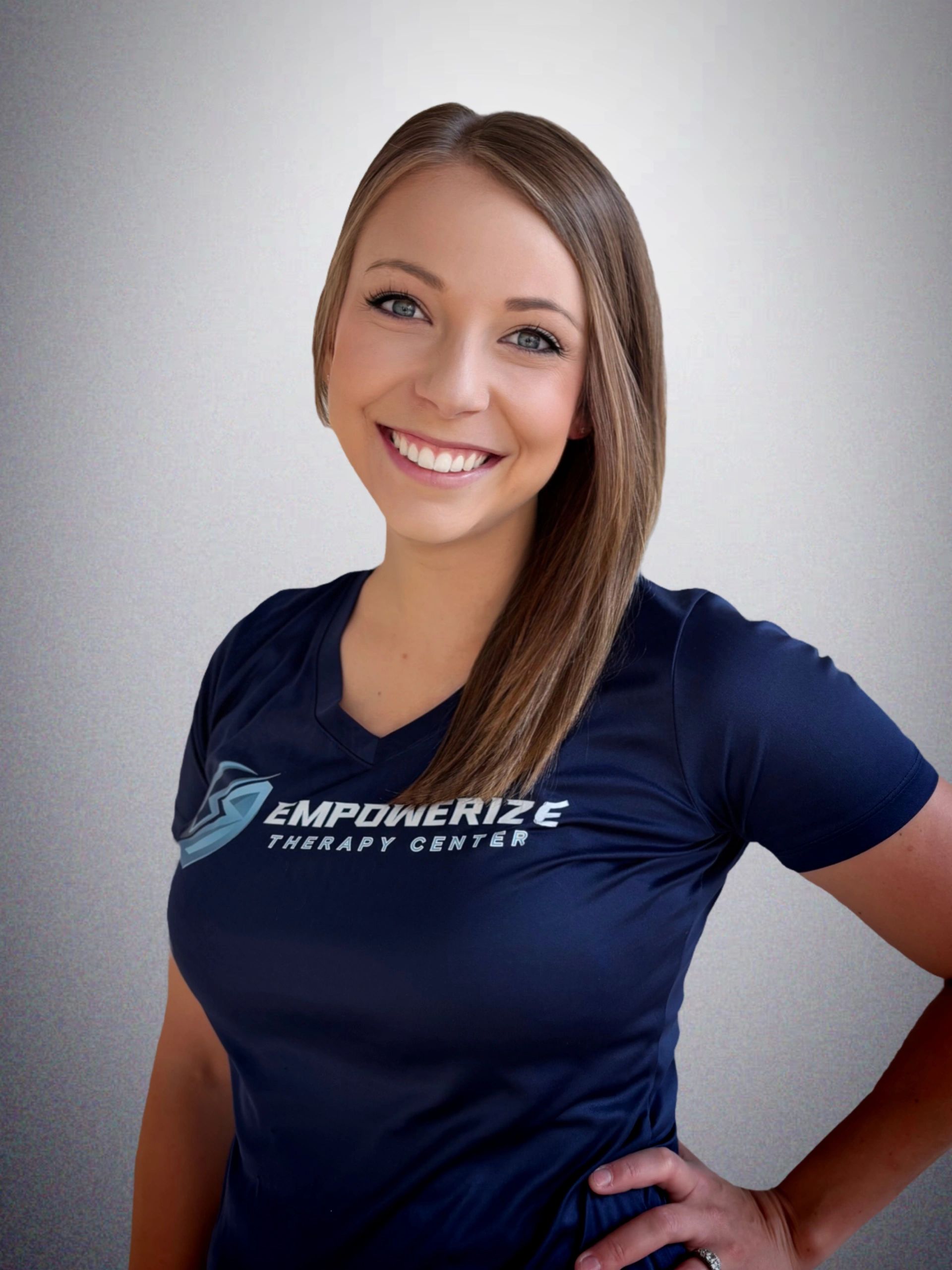
Alicia Hisey, PT, DPT, NCS
Owner and physical therapist, Empowerize Therapy Center
Alicia has more than eight years of experience in neurologic rehabilitation for children and adults, including cerebral palsy, stroke, brain injury, spinal cord injury, and developmental delays. Her training in all three approaches lets her build one plan that uses each tool where it fits, around the goals you set together.
Doctor of Physical Therapy (DPT)Licensed physical therapist
Neurologic Clinical Specialist (NCS)Board certification in neurologic physical therapy
TheraSuit MethodTrained and certified, 2022
Dynamic Movement Intervention (DMI)Trained and certified, 2025
Photobiomodulation (cold laser)Neuromotor training through Infinity Lasers, 2026
Intensive physical therapy is a short block of frequent, longer physical therapy sessions focused on specific movement goals. At Empowerize it is a four-week program, 3 hours a day, 5 days a week.
Four weeks in a row: 3 hours a day, 5 days a week, for 60 scheduled hours. Sessions are paced to each person, so the 60 hours are scheduled therapy time, not 60 hours of nonstop exercise.
The program combines goal-focused physical therapy with the TheraSuit Method, Dynamic Movement Intervention (DMI), and cold laser therapy (photobiomodulation). Cold laser is used for some people, not everyone, and each plan is set after the evaluation.
The TheraSuit Method is an intensive exercise program that uses a soft suit with elastic cords to support alignment and add resistance while a person practices strengthening, balance, transitions, and walking. Research suggests the exercise is the most important part.
DMI is a hands-on physical therapy method for children with gross motor delays. The therapist uses exercises against gravity and gradually reduces support so the child builds balance and postural control. Published research on DMI is limited to case reports so far.
Cold laser therapy, or photobiomodulation, uses low-power red and infrared light. Avant's LZ30 lasers are FDA-cleared for temporary relief of minor muscle and joint pain, stiffness, and muscle spasm, and to temporarily increase local circulation. We use it for some people as an add-on to physical therapy.
Alicia Hisey, PT, DPT, NCS, the owner of Empowerize and a board-certified neurologic clinical specialist. She is trained and certified in the TheraSuit Method (2022) and DMI (2025), and completed neuromotor photobiomodulation training through Infinity Lasers (2026).
Both. We offer the intensive program to children and adults. DMI is designed for children, so the mix of approaches depends on age and goals.
It can be a good fit for some children with cerebral palsy, but not all. It depends on the evaluation, medical history, how much activity your child can tolerate, and your family's goals. We'll help you weigh an intensive against weekly therapy.
Often, yes. Hypotonia is one of the conditions TheraSuit and DMI are commonly used for. Whether the program fits your child is decided at the evaluation.
An evaluation at Empowerize, a physician referral or prescription, medical clearance, and recent imaging, such as a hip X-ray.
The intensive program is a self-pay package. Call us at (810) 772-7600 for current pricing. Weekly physical therapy at Empowerize can be billed to insurance, and our office coordinator can check your benefits.
Not for everyone. A concentrated block gives many chances to practice, which can help some people work toward specific goals. Others do better with steady weekly therapy. We can talk through which fits you or your child.
Our clinic is at 9715 Village Place Blvd in Brighton, Michigan, near I-96 and US-23. Families come to us from across Livingston County and southeast Michigan.
Call (810) 772-7600 or send a request. We will talk through your goals and schedule an evaluation with Alicia.
Written by the Empowerize physical therapy team. Page updated .
Wondering if an intensive is right for your family? Let's talk it through.