

Pediatric Therapy
The Benefits of Play-Based Therapy
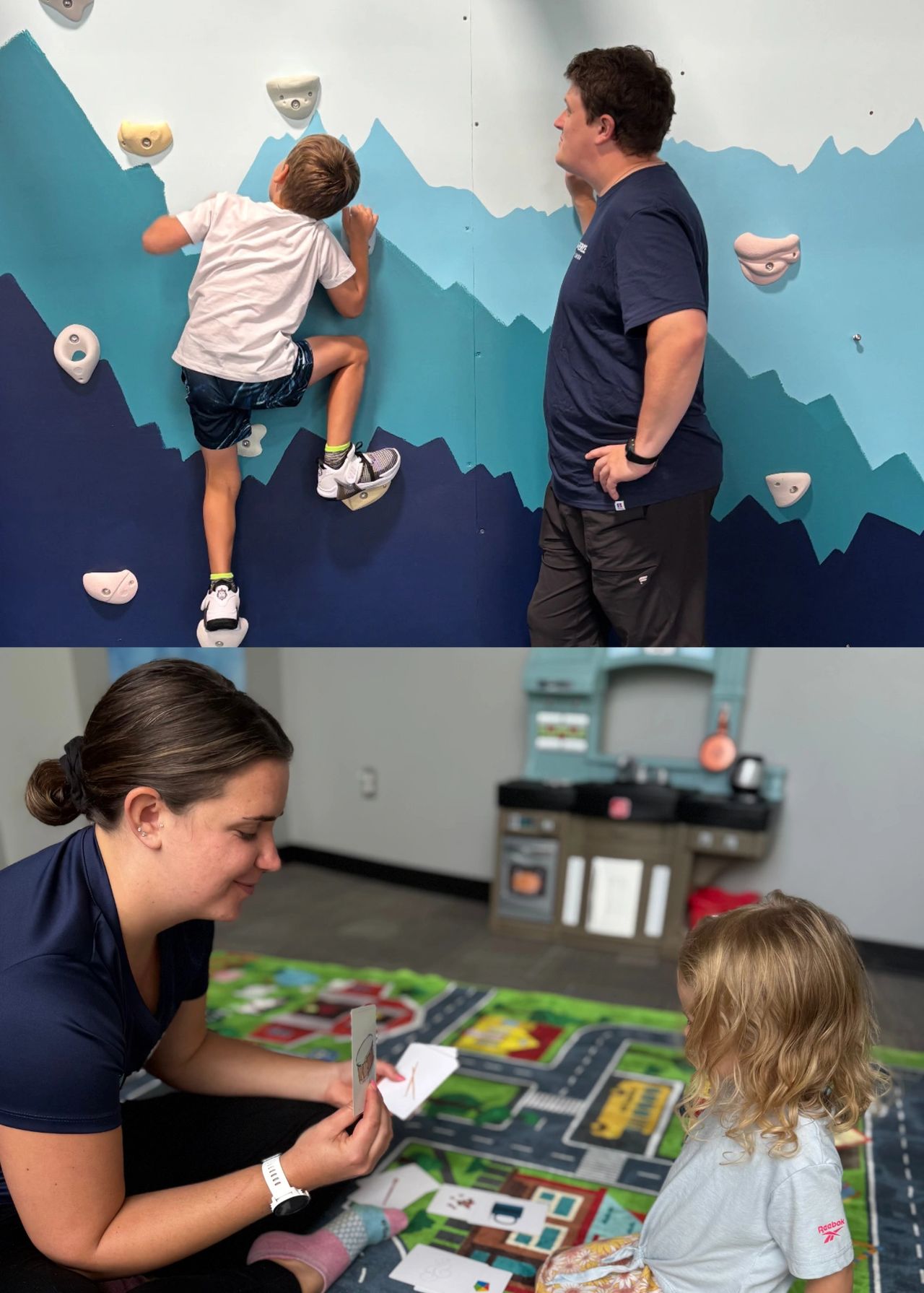
Physical Therapy and Speech Therapy at Empowerize Therapy Center (2025)
At Empowerize Therapy Center, we believe play is more than just fun, it is a powerful and evidence-based tool used to support children who experience developmental delays, neurological differences, or challenges with communication, movement, or emotional regulation. While all children benefit from playing in their daily lives, play-based therapeutic approaches are specifically designed to help children who need additional developmental support reach their fullest potential.
Through play therapy, speech therapy, physical therapy, and interdisciplinary collaboration, our therapists use purposeful play to help children build skills in ways that feel safe, motivating, and developmentally appropriate.
Why Play-Based Therapy?
Children do not learn or grow best when they feel pressured or overwhelmed. Play allows therapists to meet children where they are developmentally while creating a supportive environment that encourages exploration, engagement, and progress.
Play-based therapy is especially effective for children with diagnoses such as:
- Autism Spectrum Disorder (ASD)
- Attention-Deficit/Hyperactivity Disorder (ADHD)
- Cerebral Palsy (CP)
- Global Developmental Delay
- Speech and Language Delays
- Sensory Processing Differences
- Genetic or Neurological Conditions
By embedding therapeutic goals into play, children are more likely to participate, practice new skills, and generalize those skills into daily life.
Play Therapy: Supporting Emotional and Social Development
Play therapy helps children who have difficulty expressing emotions, managing behavior, or navigating social situations. Through toys, imaginative play, art, and games, children can safely explore feelings, build coping strategies, and strengthen emotional regulation.
Examples of who benefits from play therapy include:
- Children with autism who struggle with emotional expression or social understanding
- Children with ADHD who need support with impulse control and self-regulation
- Children who have experienced trauma, anxiety, or emotional stress
- Children with developmental delays impacting social or emotional skills
Play therapy provides a safe space for children to build confidence, self-awareness, and healthy coping strategies.
Play-Based Speech Therapy: Building Communication Through Play
Speech-language therapy uses play as a natural and effective way to support children with communication challenges. Through games, pretend play, books, and interactive activities, therapists target language skills in meaningful, real-world contexts.
Play-based speech therapy may support children who:
- Have speech delays or difficulty producing sounds
- Experience language delays (expressive or receptive)
- Have autism and benefit from social communication and pragmatic language support
- Have ADHD and struggle with attention, turn-taking, or conversational skills
- Use AAC or alternative communication systems
For example, a pretend grocery store may target requesting, labeling, sentence building, and turn-taking, while shared book reading supports vocabulary, comprehension, and storytelling skills.
Play-Based Physical Therapy: Strengthening Movement and Motor Skills
Physical therapy for children often looks like play, but every movement is purposeful. Play-based PT supports children with motor delays or physical impairments by embedding therapeutic exercises into engaging activities.
Children who may benefit from play-based physical therapy include those with:
- Cerebral Palsy (CP)
- Developmental Coordination Disorder
- Muscle weakness or low tone
- Gross motor delays
- Neurological or genetic conditions affecting movement
Activities such as obstacle courses, ball games, climbing, and balance challenges help children improve strength, coordination, endurance, balance, and body awareness in a fun and motivating way.
Sensory Integration and Regulation Through Play
Many children with autism, ADHD, or sensory processing differences experience challenges with sensory regulation. Play-based therapy provides sensory-rich experiences that help children better understand and regulate their bodies.
Sensory play may include:
- Swinging, pushing, or pulling activities
- Tactile play with textures
- Movement-based games for body awareness
These activities support attention, emotional regulation, and readiness for learning across all therapy disciplines.
A Multidisciplinary, Collaborative Approach
Our clinic values collaboration. When children receive speech therapy, physical therapy, and play therapy together, therapists work as a team to support the whole child. Goals are aligned across disciplines to promote consistent progress and carryover into home, school, and community settings.
This collaborative approach is especially beneficial for children with complex needs, such as autism, global developmental delay, or neurological conditions.
Why Families Choose Play-Based Therapy
Play-based therapy is not about “just playing”, it is about using play intentionally to help children grow. For children with developmental or neurological challenges, play-based therapy:
- Reduces anxiety and increases motivation
- Encourages active participation
- Builds confidence and independence
- Supports meaningful, functional skill development
When therapy feels engaging and supportive, children are more likely to succeed.
Supporting Your Child’s Growth Through Play
While play is a natural part of childhood, play-based therapeutic services serve a specific role for children with identified developmental needs. When delivered by trained professionals, play becomes a powerful pathway to communication, movement, emotional well-being, and independence.
If you have concerns about your child’s development or would like to learn more about our services, we invite you to reach out to our clinic. Together, we can help your child learn, grow, and thrive through the power of play.
Final Thoughts
Play is the work of childhood, and play-based therapies honor that work for children who need extra support. Whether a child is learning to express emotions, develop communication skills, or strengthen physical abilities, play provides a bridge between challenge and growth.
While all children deserve time to play, play-based therapeutic interventions serve a specific and vital role for children with identified developmental needs. When delivered by trained professionals, play becomes more than recreation, it becomes a powerful pathway to communication, mobility, emotional well-being, and independence.
Play therapy reminds us that children do not need to be “fixed”. They need to be heard, and play is how they speak. Whether used to address behavioral challenges, emotional struggles, or developmental concerns, play therapy provides children with a powerful pathway toward understanding, connection, and healing.
As George Bernard Shaw once said, “We don’t stop playing because we grow old; we grow old because we stop playing.” For children, play is not optional—it is essential. And through play therapy, that essential process becomes a bridge to emotional well-being.
Start your recovery journey today at Empowerize Therapy Center in Brighton, Michigan, where a team of passionate and knowledgeable providers are ready to support you along the way. To help you rise above your limits!
Phone: (810) 772-7600 | Fax: (810) 206-3165 | Website: empowerizetherapy.com | Address: 9715 Village Place Blvd Brighton MI 48116
When to talk to a therapist
If you have questions about your situation or your child's, contact our team or learn more about physical therapy at Empowerize. This article is general information and is not a substitute for an evaluation.