Speaking, understanding, thinking, and swallowing after a stroke, brain injury, or neurological diagnosis.
What is adult speech therapy?
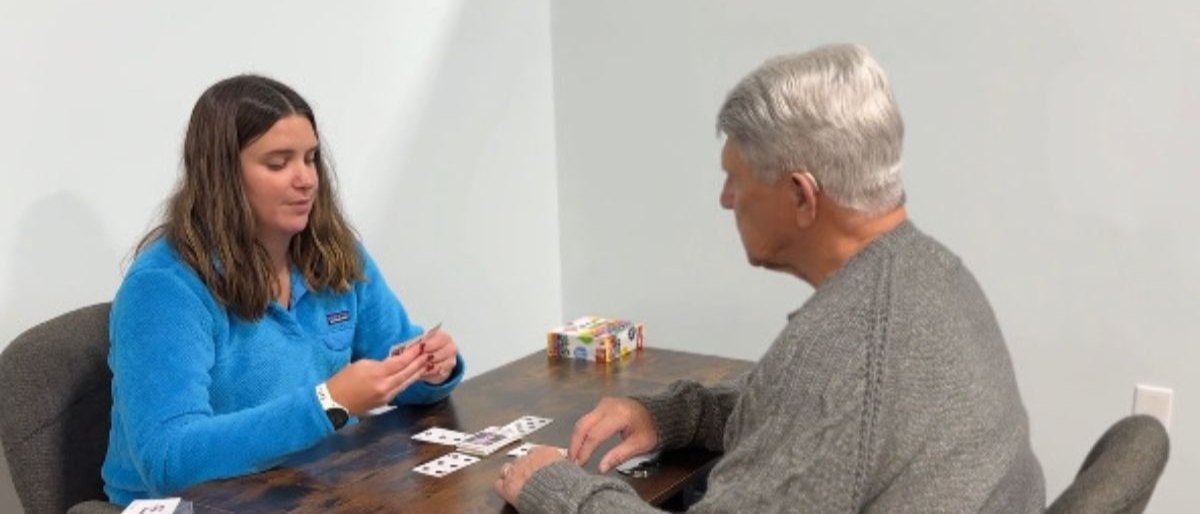
Adult speech therapy helps adults speak, understand, think, and swallow more safely after a stroke, brain injury, or illness, or while living with a progressive condition such as Parkinson's disease. At Empowerize in Brighton, Michigan, a certified speech-language pathologist works one-on-one with you on the goals that matter in your daily life.
Most private insurance accepted, plus self-pay rates
Referral
Depends on your insurance plan. We will help you check.
Phone
(810) 772-7600
What we treat
What can adult speech therapy help with?
Start with what feels harder in daily life. You don't need to know the clinical term.
Finding words or understanding what people say
Aphasia
Aphasia is a language disorder caused by damage to the parts of the brain that process language, most often after a stroke. It can affect speaking, understanding, reading, and writing. It does not affect intelligence.
Speech that sounds slurred, slow, or hard to understand
Dysarthria
Dysarthria happens when the muscles used for speaking are weak or hard to control because of a stroke, brain injury, or a condition such as Parkinson's disease, MS, or ALS. Therapy works on breath support, clarity, and pacing.
Knowing what to say, but the words come out wrong
Apraxia of speech
Apraxia of speech affects how the brain plans speech movements. The muscles work, but sequencing them into words is difficult. Therapy uses structured practice to rebuild those movement patterns.
A voice that has become quiet, hoarse, or tires easily
Voice disorders
A softer voice is one of the most common speech changes with Parkinson's disease. Sarah is a certified LSVT LOUD clinician, a structured voice program for people with Parkinson's disease and other neurological conditions.
Memory, attention, and problem solving
Cognitive-communication disorders
These are the thinking skills behind communication: following a conversation, remembering appointments, organizing a task, or getting to the point of what you want to say. They often change after a brain injury, concussion, or stroke, or with dementia.
Dysphagia means difficulty swallowing. Your speech-language pathologist evaluates how you swallow, then teaches exercises and strategies to help you eat and drink more safely.
AAC includes letter boards, picture systems, and speech-generating devices. It can help people with ALS, severe aphasia, or other conditions that limit speech. Both of our speech-language pathologists have AAC experience, from choosing a system to long-term communication planning.
Is it time?
When should an adult see a speech therapist?
Talk with a speech-language pathologist if any of these sound familiar, for you or someone you care for.
People ask you to repeat yourself more than they used to
You know the word you want but cannot get it out
Your voice has become quieter, hoarse, or tired by the end of the day
You cough, clear your throat, or feel food stick when you eat or drink
Conversations, reading, or following directions feel harder than before
Family members have noticed changes in memory or attention
A doctor or hospital team recommended speech therapy after a stroke, injury, or surgery
What to expect
How does adult speech therapy work at Empowerize?
01
Call or request an appointment
Our office coordinator checks your insurance benefits and whether your plan needs a referral.
02
Evaluation
Your speech-language pathologist looks at speech, language, thinking, voice, or swallowing, depending on the concern, and asks what you want to get back to.
03
A plan built around your life
Goals for the conversations, meals, and daily tasks that matter to you, shared with your physician.
04
One-on-one sessions
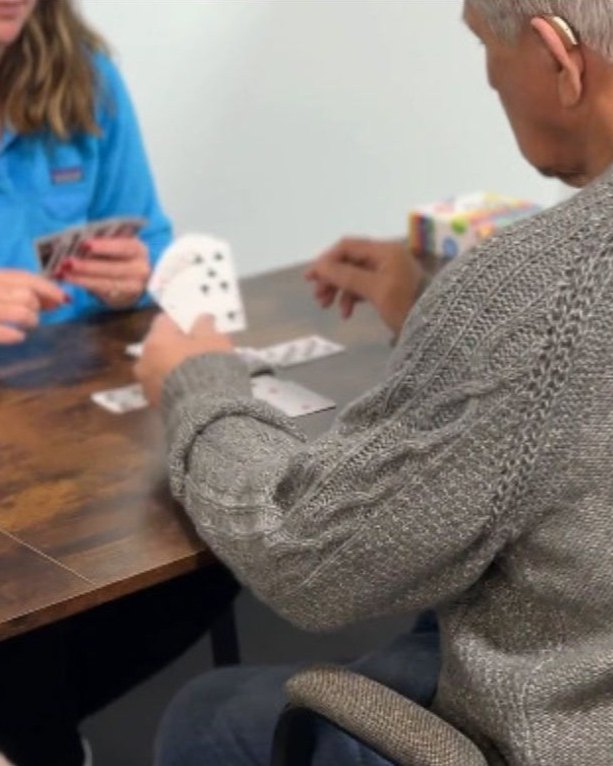
Regular sessions with the same therapist, plus strategies to practice at home with family or caregivers.
Your speech therapy team
Who will I work with?
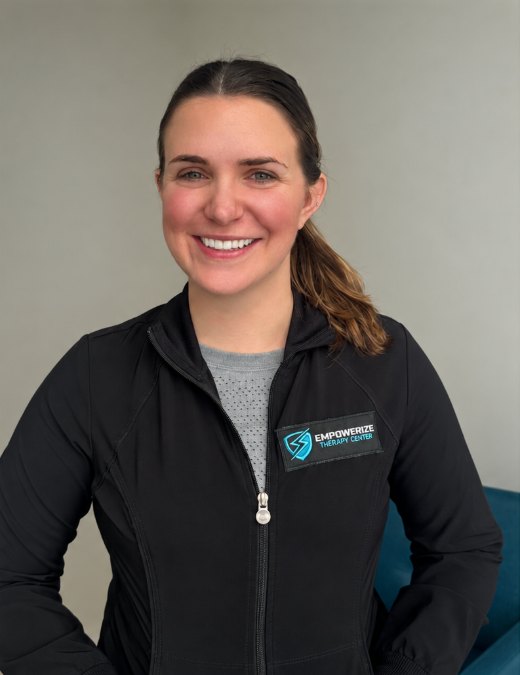
Both of our speech-language pathologists hold the Certificate of Clinical Competence (CCC-SLP) from the American Speech-Language-Hearing Association.
Our founder is a board-certified neurologic clinical specialist. Our speech team includes a Certified Brain Injury Specialist (CBIS) and a certified LSVT LOUD clinician for Parkinson's voice treatment.
Three therapies, one team
If you also need physical or occupational therapy, your therapists work in the same clinic and coordinate your goals.
One-on-one time
Every session is with your therapist, one-on-one, at our clinic in Brighton.
A speech-language pathologist (SLP) evaluates and treats problems with speech, language, voice, the thinking skills that support communication, and swallowing. For adults, that often means recovery after a stroke or brain injury, or keeping communication and swallowing as strong as possible with a progressive condition.
Referral requirements depend on your insurance plan. Call us at (810) 772-7600 and our office coordinator will help you check.
We accept most private insurance and offer self-pay rates for all services. Our office coordinator can check your benefits before your first visit.
Not necessarily. Many people keep making progress with speech and language well after the first months of recovery. An evaluation shows where you are now and which goals make sense.
Yes. Parkinson's disease often makes the voice quieter and speech less clear, and it can affect swallowing. Sarah is a certified LSVT LOUD clinician. LSVT LOUD is a structured voice treatment program for people with Parkinson's disease and other neurological conditions.
Your first visit is an evaluation with your speech-language pathologist. Depending on the concern, they look at speech, language, thinking, voice, or swallowing, and ask what you want to get back to. You leave with goals and a written plan built around them.
It depends on the condition, your goals, and how often you come. Your speech-language pathologist sets goals at the evaluation and reviews progress with you regularly.
Yes. Family members and caregivers are welcome. They often learn strategies to use at home so practice carries into daily life.
Speech therapy can introduce other ways to communicate, such as letter boards, picture systems, or speech-generating devices (AAC). Both of our speech-language pathologists have experience helping adults choose and learn an AAC system.
Our clinic is at 9715 Village Place Blvd in Brighton, Michigan. Adults come to us from Brighton and nearby communities in Livingston, Washtenaw, Oakland, Genesee, Wayne, and Ingham counties.
Written by the Empowerize speech therapy team. Page updated .
Not sure if speech therapy is the right fit? We'll help you figure it out.